ANTAGONISTS: algorithmic resistances
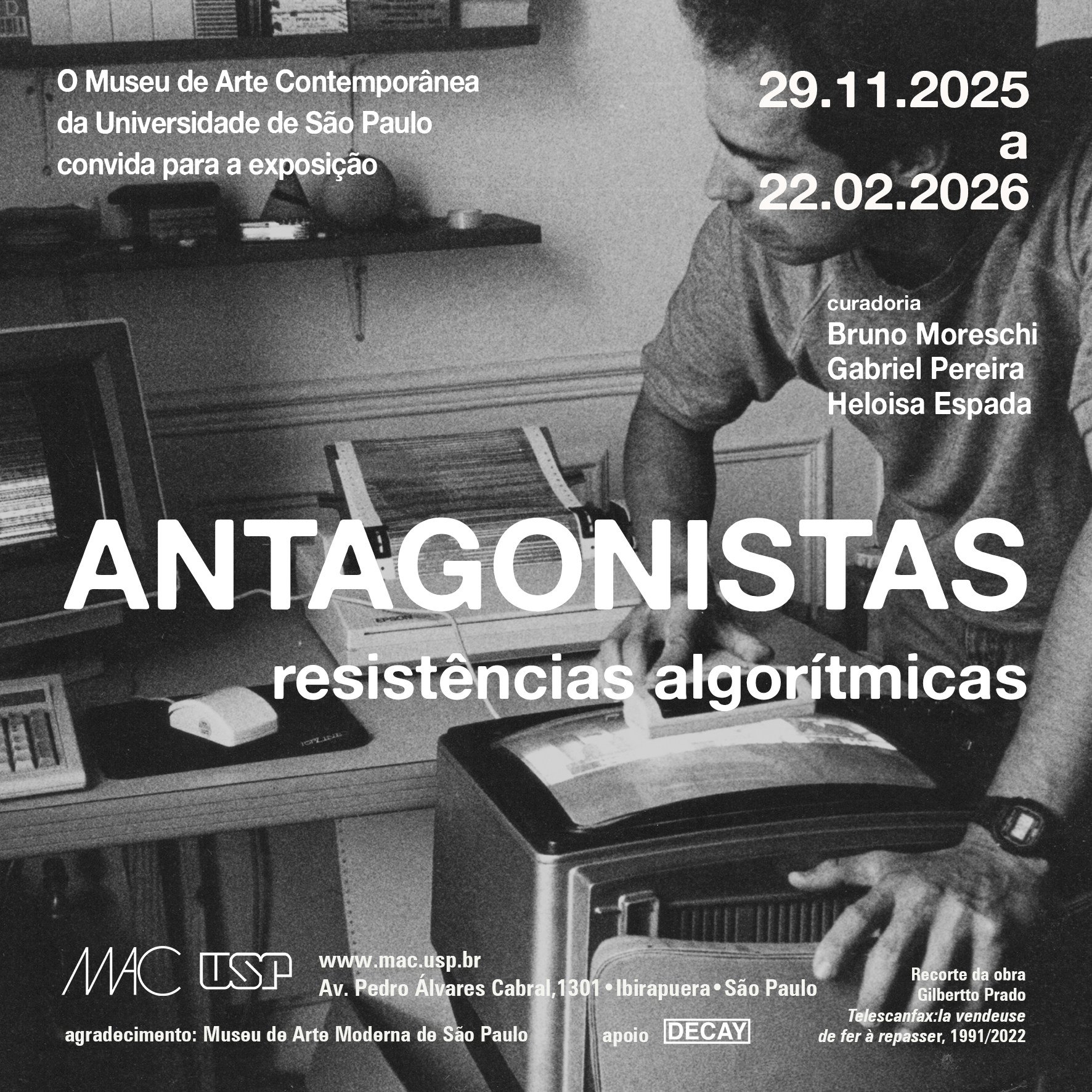
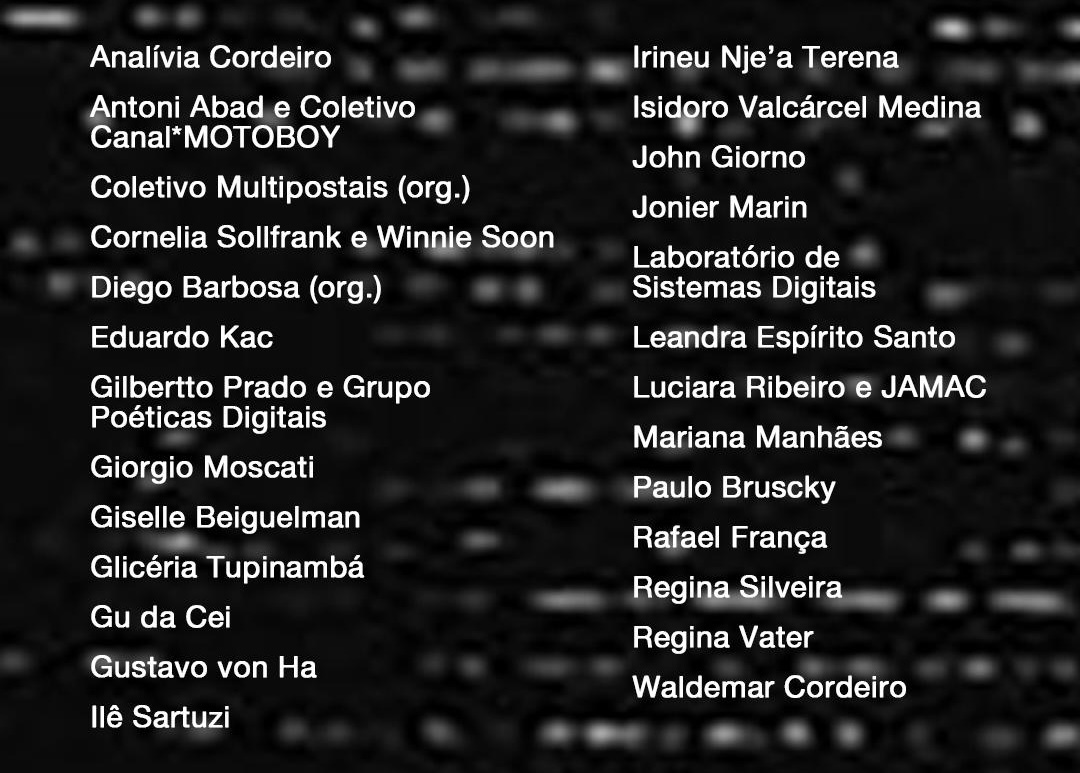
ANTAGONISTS: algorithmic resistances brings together over 30 works by 26 artists and collectives who, since the 1960s, have creatively resisted hegemonic information technologies. Most works belong to the MAC USP collection, a pioneering museum in Brazilian collectionism of new media, complemented by select loans and works commissioned especially for the exhibition.
The exhibition was presented at Museum of Contemporary Art at the University of São Paulo (MAC USP) from November 29, 2025 to February 22, 2026, curated by Bruno Moreschi, Gabriel Pereira, and Heloisa Espada with curatorial assistance by Gabriele Conti.
The show traces a historical line from Brazil’s first computer (the “Ugly Duckling”) to current projects on algorithmic surveillance and Indigenous knowledges. It is organized in four thematic sections: “Paleocybernetic Ruptures”, “Networked Contaminations”, “Data extraction, Subversion, and Archiving”, and “Gambiarras, Errors, and Bodies”.
The exhibition also led to the organization of an international seminar in February 2026. More details here.
The exhibition will become a catalogue/book with a specialized publisher in the second half of 2026. Please contact me via e-mail if you wish to read the exhibition texts and see further information on the artworks in the meanwhile.

ANTAGONISTS: algorithmic resistances
(opening text)
We are living in a moment when the promises of Artificial Intelligence are rapidly capturing the collective imagination. The discourse of companies and governments centers on the unprecedented potential of a technological revolution. Yet, public debate around algorithmic technologies remains haunted by a troubling presentism: it overlooks how we arrived here and how our decisions are actively shaping the future.
ANTAGONISTS: algorithmic resistances seeks to subvert this logic. Drawing from the MAC USP collection, the exhibition contextualizes the vast production of artists, activists, and scientists who, since the 1960s, have proposed strategies of resistance to hegemonic information technologies. Even with limited resources, they devised alternative ways to engage with the emerging regime of data and algorithms forming around them.
We understand an algorithm as a set of instructions or rules that guide information systems — from knowledge concerning ceramic production to the development of mobile applications. The works presented question notions of high and low technology, efficiency and error, archival and erasure. Some are composed of obsolete software and fruit juicers, others create innovative platforms. Preserving technologies deemed outdated becomes a political act: artists repair code and collect missing data.
These works are antagonistic insofar as they respond to needs that have been neglected or even erased by dominant technologies and their interests. In the 1970s, as a reaction to Latin American dictatorships, artists used the postal system to create dissident networks of communication and art circulation. Today, in an increasingly platformized digital world, artists find cracks in the system to carve out spaces for expression and resistance. Faced with the omnipresence of surveillance and monitoring mechanisms, they imagine how we might reclaim images and data to craft narratives of resistance. Indigenous cosmologies, for instance, offer perspectives capable of conceiving technologies far beyond Western logic.
Antagonists from different eras show us that there have always been—and there always will be—other ways to imagine and construct our technological future.